

Paneer is an important ingredient in kitchens across India. From restaurants and hotels to catering businesses, supermarkets, and cloud kitchens, many food businesses use paneer regularly to prepare dishes their customers enjoy.
However, finding a reliable paneer supplier involves more than comparing prices. Businesses need a distributor who can provide consistent product quality, maintain proper storage and handling practices, communicate clearly, and meet their delivery requirements.
Choosing the right fresh paneer distributor in India can make everyday purchasing easier and help businesses manage their food inventory more effectively.
For businesses that depend on paneer for their daily operations, a dependable supply arrangement can make a real difference. It helps kitchen teams plan their menus, retailers manage stock, and purchasing managers organise regular orders.
Why Choosing the Right Paneer Distributor Matters
When a business uses paneer frequently, even a small supply problem can affect its daily operations. Delayed deliveries, inconsistent quality, or unexpected stock shortages may create difficulties for kitchen staff and purchasing teams.
A reliable distributor helps businesses plan their requirements and understand what to expect from each order.
Consistent Product Quality
Consistency is important for restaurants, hotels, and other food-service businesses. Paneer is used in a variety of dishes, including paneer butter masala, kadai paneer, paneer tikka, sandwiches, rolls, and snacks.
When the product’s texture and quality remain consistent, kitchen teams can prepare dishes more predictably.
Before selecting a distributor, businesses should review the product specifications, ingredients, packaging, and storage instructions. Ordering a sample, where available, can help buyers assess whether the paneer meets their requirements.
Freshness and Proper Handling
Fresh paneer is a perishable dairy product that requires appropriate storage and transportation conditions.
Businesses should ask how the product is packed, stored, and transported. They should also check the manufacturing or packing date, best-before date, and recommended storage temperature.
On receiving an order, inspect the packaging and follow the manufacturer’s storage instructions. Proper refrigeration and stock rotation are essential for maintaining product quality and food safety.
Regular Product Availability
Restaurants and commercial kitchens often need paneer on a predictable schedule. A shortage during a busy service can lead to menu changes, additional purchasing costs, or customer dissatisfaction.
Before committing to a supplier, confirm the availability of the required quantities and ask about lead times for repeat orders.
A clear ordering process helps businesses plan their purchases and prepare for periods when demand increases.
Reliable Delivery Arrangements
Delivery requirements vary from one business to another. A restaurant may need frequent deliveries, while a supermarket or wholesaler may place larger orders less often.
Check whether the distributor serves your location, what delivery schedules are available, and whether the transportation arrangements are appropriate for a perishable dairy product.
Confirm delivery charges, minimum order quantities, and the process for handling delayed or damaged shipments before placing regular orders.
Who Needs a Fresh Paneer Distributor in India?
Paneer is used by several types of businesses, and each has different purchasing requirements. Understanding these requirements helps buyers select a suitable supply arrangement.
Restaurants and Food-Service Businesses
Restaurants use paneer in curries, starters, grilled dishes, rolls, sandwiches, and combination meals. The quantity required depends on the menu, customer demand, and number of meals served.
A restaurant sourcing paneer regularly should look for a supplier that can explain product specifications, order requirements, delivery schedules, and pricing clearly.
Hotels and Resorts
Hotels may use paneer across restaurant menus, buffets, banquet services, and private events. Their demand can vary according to occupancy, bookings, and special occasions.
A suitable distributor should be able to clarify availability and expected lead times so purchasing teams can plan stock according to upcoming requirements.
Catering Companies
Catering businesses may need substantial quantities of paneer for weddings, corporate functions, family celebrations, and other events.
Because the required quantity can change significantly between events, caterers should confirm availability well in advance. They should also discuss delivery timing, packaging, and storage arrangements to ensure the product reaches the venue in suitable condition.
Cloud Kitchens
Cloud kitchens often rely on carefully managed inventories to control costs and maintain consistent service. Paneer may be used in vegetarian meals, wraps, curries, snacks, and meal combinations.
For these businesses, predictable ordering, clear product specifications, and suitable delivery arrangements can simplify procurement.
Wholesalers and Food Distributors
Wholesalers require a different approach because they may supply several retail outlets or food-service customers.
They should evaluate order volumes, storage capacity, transport costs, delivery coverage, pricing structures, and repeat-order availability before entering a regular supply arrangement.
How to Choose a Reliable Fresh Paneer Distributor
Not every supplier will be suitable for every business. A practical evaluation process can help buyers compare available options.
1. Check Product Information
Ask for the ingredient list, product specifications, packaging details, and storage instructions. Confirm whether the product meets your business’s requirements.
If you are purchasing paneer for resale, make sure the packaging and labelling provide the information required for your business and applicable regulations.
2. Verify Food Safety Credentials
Food safety should be a priority when purchasing dairy products for commercial use.
Check the relevant FSSAI registration or licence, as applicable, and request any necessary product documentation. Verify the information instead of relying solely on verbal assurances.
3. Understand Pricing and Order Terms
The price of paneer may vary depending on the product specification, quantity, packaging, location, and delivery arrangements.
Ask for a written quotation that explains the price per unit or kilogram, applicable taxes, delivery charges, minimum order quantity, and payment terms.
Comparing the total delivered cost gives businesses a more useful basis for making purchasing decisions.
4. Confirm Supply Capacity
A distributor may be able to fulfil a small order but may have different requirements for larger or recurring orders.
Explain your expected daily, weekly, or monthly consumption and ask whether the supplier can accommodate that demand. Confirm any advance-order requirements during busy periods.
5. Evaluate Customer Support
Clear communication can make procurement easier. Buyers should know how to place an order, confirm availability, ask about delivery, and report any product concerns.
Before establishing a long-term relationship, understand the supplier’s process for resolving issues involving missing quantities, damaged packaging, or delayed deliveries.
Why Businesses Should Look Beyond the Lowest Price
Controlling purchasing costs is important for every food business. However, choosing a distributor based only on the lowest price can overlook other factors that affect overall value.
For example, delayed deliveries may disrupt kitchen operations. Inconsistent product quality may affect preparation. Poor stock management can increase wastage when products are not used within their recommended shelf life.
Instead of comparing price alone, evaluate the combination of product quality, storage and handling, supply consistency, delivery reliability, and commercial terms.
A supplier that fits your operational requirements can help make regular purchasing more predictable.
The Importance of Cold-Chain Management for Fresh Paneer
Fresh paneer requires appropriate temperature control throughout storage and transportation. If the product is exposed to unsuitable conditions, its quality and safety may be affected.
Businesses should understand the storage requirements before placing an order and confirm how the distributor manages transportation.
Important checks include:
- Recommended storage temperature
- Suitable packaging for transportation
- Manufacturing or packing date and best-before date
- Delivery handling procedures
- Product inspection at the time of receipt
- Refrigeration and stock rotation at the destination
Retailers and commercial kitchens should follow the product label and applicable food-safety guidance. They should not assume that fresh paneer can be stored at room temperature for extended periods.
State Delight for Food Distribution and Sourcing
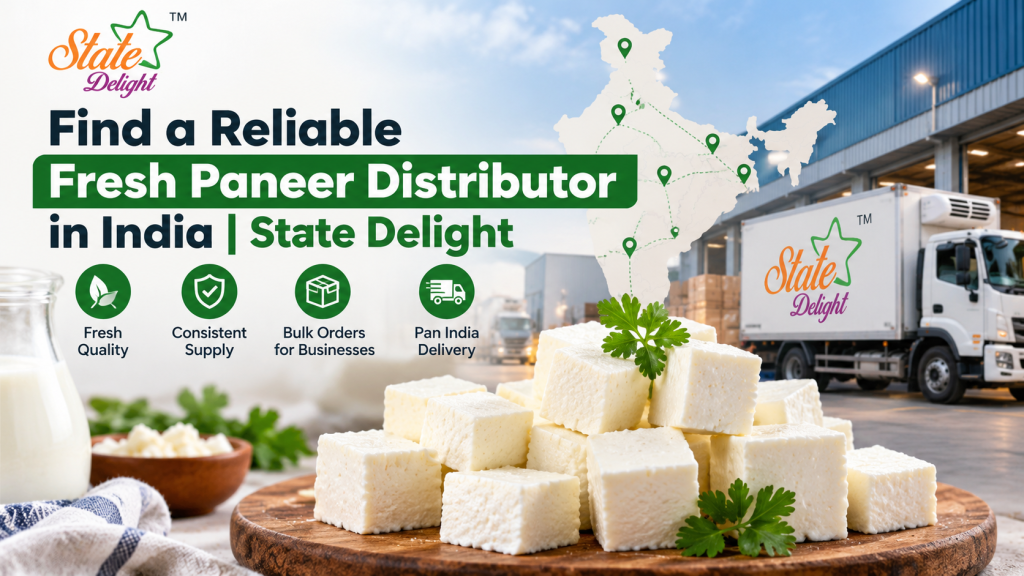
State Delight is a food-products platform that businesses can explore when researching food sourcing and distribution options.
Restaurants, retailers, wholesalers, and other food businesses looking for a fresh paneer distributor in India should confirm their requirements directly with the company, including current product availability and supply arrangements.
Businesses can visit the State Delight online store to explore the current product catalogue.
If you are interested in sourcing paneer, contact State Delight to ask whether it is currently available for your business. Discuss product specifications, packaging, order quantities, pricing, delivery coverage, and applicable food-safety documentation before placing an order.
Confirming these details in advance helps buyers determine whether the product and supply arrangement match their operational needs.
Conclusion
Finding a reliable fresh paneer distributor in India involves more than finding a seller with competitive prices. Businesses should evaluate product quality, freshness, packaging, food-safety practices, availability, and delivery arrangements before choosing a supplier.
Restaurants, hotels, caterers, cloud kitchens, retailers, and wholesalers may all have different requirements. Taking the time to compare those requirements with a supplier’s actual capabilities can help businesses make more informed purchasing decisions.
State Delight is one platform businesses can explore when researching food products and distribution options. Contact the company directly to verify current paneer availability, commercial supply terms, and delivery coverage.
Choosing a distributor based on clear information and verified requirements can make regular paneer procurement easier to manage.